
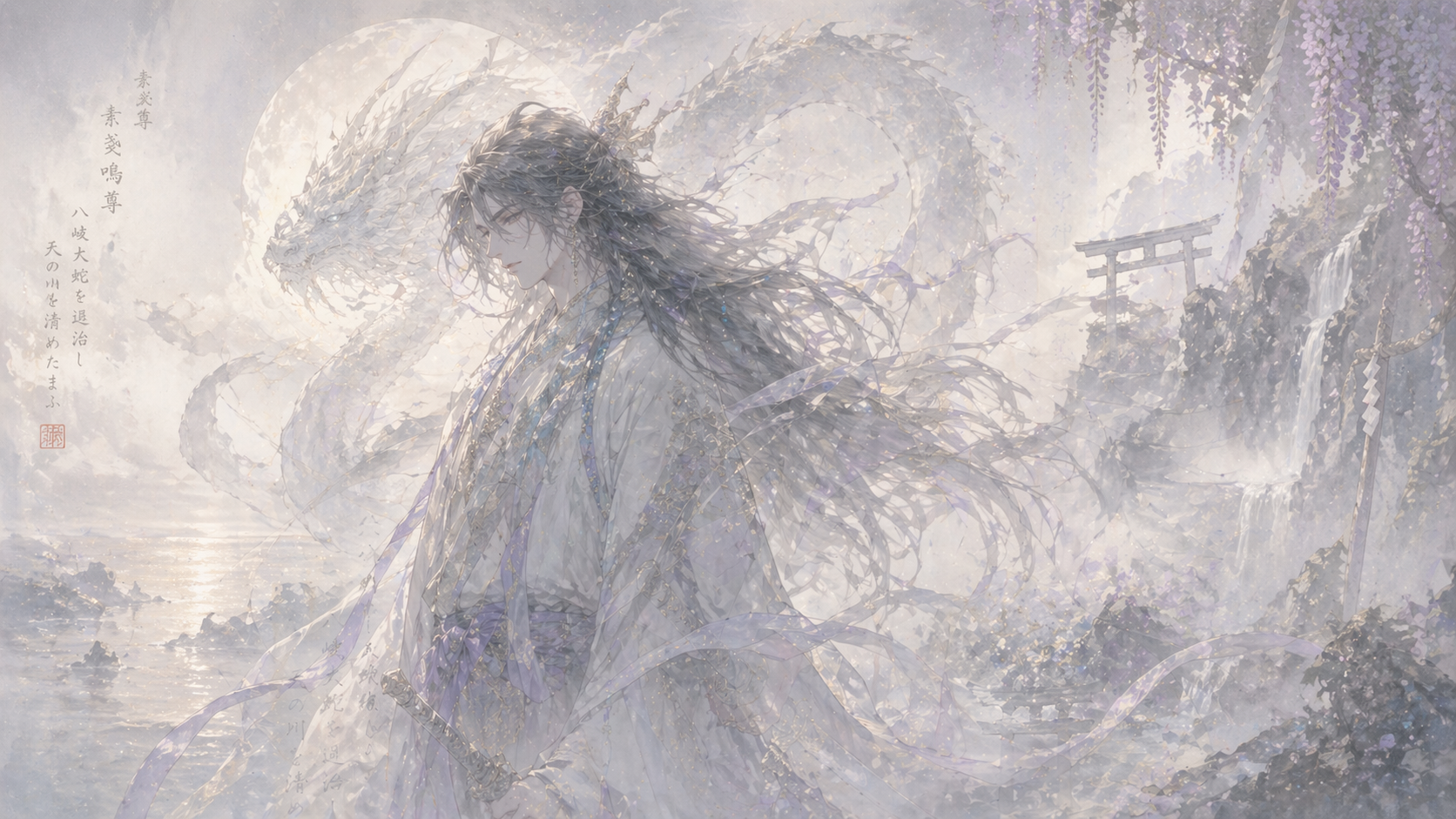
SUSANOO
荒ぶる嵐の神にして、詩を詠んだ最初の歌人。泣き虫でありながら大蛇を斬った英雄。
素戔嗚尊は、日本神話のなかで最も人間くさい神様かもしれません。
The god of raging storms and the first poet to compose verse. A hero who, despite being a crybaby, slew a giant serpent.
Susanoo-no-Mikoto may well be the most human-like deity in Japanese mythology.
追放 ― 荒ぶる神の行く末
素戔嗚尊は、父・伊邪那岐命(イザナギノミコト)が禊を行った際に鼻から生まれた神です。海原の統治を命じられましたが、亡き母・伊邪那美命(イザナミノミコト)を慕い根の堅州国へ行くことを望んで泣き叫び続けました。その嘆きで山川が枯れ果てたため、父神に追放を命じられます。高天原を去る前に姉・天照大神(アマテラスノオオミカミ)へ別れを告げに赴きますが、乱行が重なり天照大神を天岩戸に籠らせる一因を作ったことで、ついに高天原を追われることとなりました。
Exile
Susanoo-no-Mikoto is a deity who was born from the nostrils of his father, Izanagi-no-Mikoto, during a purification ritual. Although he was ordered to rule over the seas, he wept and wailed incessantly, longing to go to the Land of the Hard Roots to be with his deceased mother, Izanami-no-Mikoto. His lamentation caused the rivers and mountains to dry up, so his father ordered him into exile. Before leaving TAKAMAGAHARA, he went to bid farewell to his sister, Amaterasu-ōmikami, but his repeated misdeeds contributed to Amaterasu-ōmikami retreating into the Cave of the Heavenly Rock, and he was ultimately banished from TAKAMAGAHARA.
神話 ― 英雄としての転生
高天原を追われた素戔嗚尊が降り立ったのは、出雲の国・鳥髪(現在の島根県)でした。そこで出会ったのは老夫婦と娘・奇稲田姫(クシナダヒメ)。八つの頭と尾を持つ八岐大蛇に娘たちを次々と食べられ、残るは末娘だけだと涙ながらに語ります。素戔嗚尊は退治を引き受けます。強力な酒を入れた樽を八つ用意し、大蛇が酔って眠ったところを十束剣で斬り伏せる。豪快な神話の中に、知恵で敵を倒す人間味が光ります。斬った尾から現れたのが、後に三種の神器となる草薙剣でした。退治を終えた素戔嗚尊は奇稲田姫を妻に迎え、出雲に宮を構えます。新居を前に詠んだのが、日本最古の和歌とされる一首です。「八雲立つ 出雲八重垣 妻籠みに 八重垣作る その八重垣を」ーー幾重にも重なる雲のように、愛する妻を守るための垣根を作ろう。
Mythology
After being banished from Takamagahara, Susanoo-no-Mikoto descended to Torikami in the land of Izumo (present-day Shimane Prefecture). There, he met an elderly couple and their daughter, Kushinada-hime. Through tears, they told him that the eight-headed, eight-tailed serpent, Yamata-no-Orochi, had devoured their daughters one after another, and that only their youngest daughter remained. Susanoo-no-Mikoto agreed to slay the serpent. He prepared eight barrels filled with potent sake and, once the serpent had drunk itself into a drunken slumber, cut it down with his Ten-Tsu-no-Tsurugi (Sword of Ten Bindings). Within this epic myth, a human touch shines through as he defeats his enemy through cunning. From one of the severed tails emerged the Kusanagi-no-Tsurugi, which would later become one of the Three Sacred Treasures. After vanquishing the serpent, Susanoo-no-Mikoto married Kushinada-hime and established a palace in Izumo. Before entering his new home, he composed a poem considered to be Japan’s oldest waka: “八雲立つ 出雲八重垣 妻籠みに 八重垣作る その八重垣を” — Like clouds piling up in layers, I will build a fence to protect my beloved wife.
信仰 ― 日本の信仰の原点
天照大神は、現在でも神道において中心的な神として信仰されています。特に三重県にある伊勢神宮の内宮には天照大神が祀られており、日本全国から多くの参拝者が訪れます。伊勢神宮は単なる宗教施設にとどまらず、日本人の精神文化の象徴ともいえる存在です。また、天照大神は光や生命、秩序の象徴として、現代においてもさまざまな場面で言及されることがあります。たとえば、日本の伝統行事や文学、芸術作品の中でもその存在は繰り返し表現されています。さらに、太陽神としての性質から、自然との共生や調和の重要性を考える際の象徴としても捉えられています。このように、天照大神は古代神話の枠を超え、現代社会においても意味を持ち続ける存在であり、日本文化の根幹を支える重要な神であるといえるでしょう。
Worship
Amaterasu Omikami is still revered today as a central deity in Shinto. In particular, Amaterasu Omikami is enshrined at the Naiku (Inner Shrine) of Ise Grand Shrine in Mie Prefecture, attracting numerous worshippers from all over Japan. Ise Grand Shrine is more than just a religious facility; it is a symbol of Japanese spiritual culture. Furthermore, as a symbol of light, life, and order, Amaterasu Omikami is often referenced in various contexts even in modern times. For example, her presence is repeatedly depicted in traditional Japanese events, literature, and works of art. Furthermore, due to her nature as a sun goddess, she is also viewed as a symbol when considering the importance of coexistence and harmony with nature. In this way, Amaterasu Omikami transcends the framework of ancient mythology to remain a figure of significance in modern society, and can be said to be a vital deity underpinning the very foundations of Japanese culture.
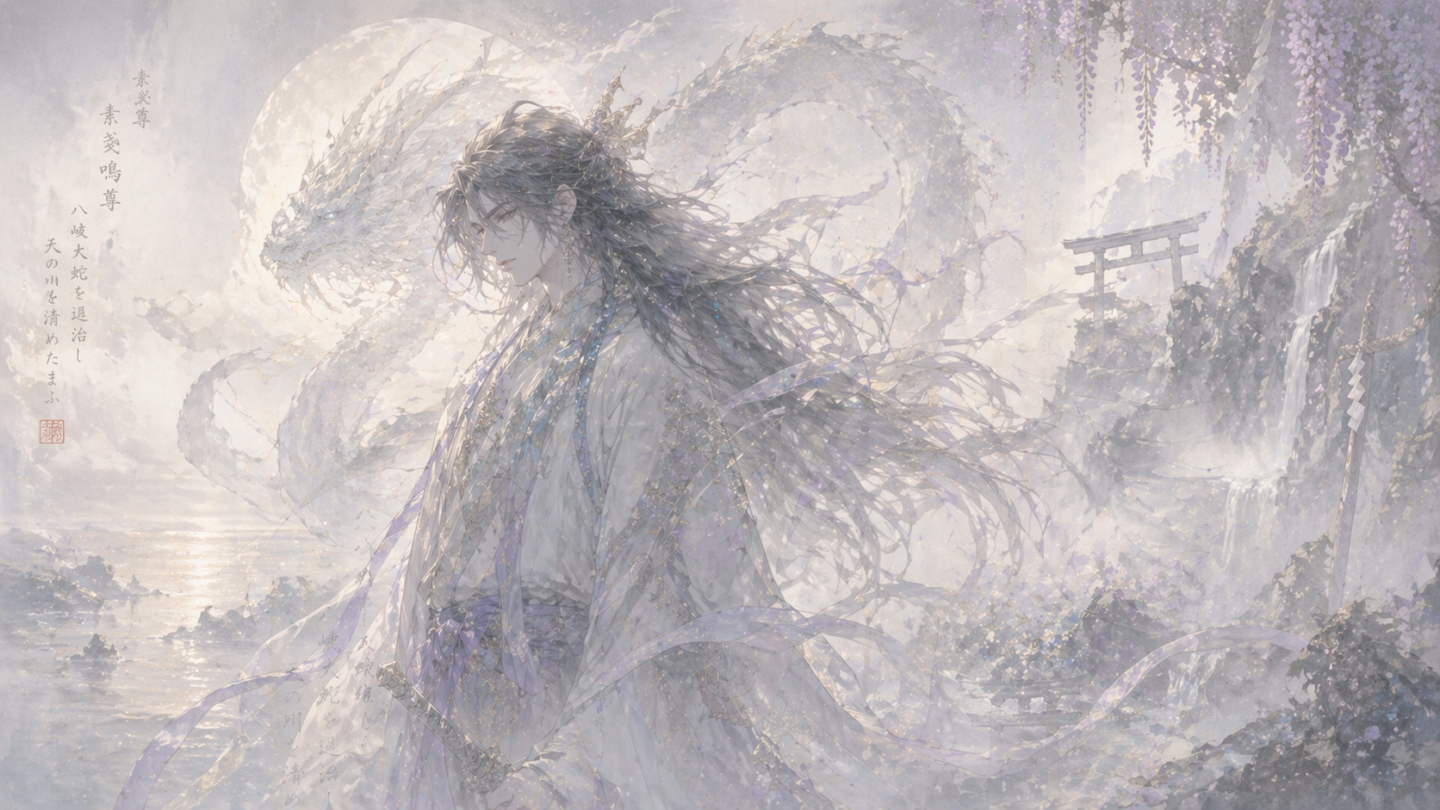
天照大神(あまてらすおおかみ)
天照大御神(あまてらすおおみかみ)
天照坐皇大御神(あまてらしますすめおおみかみ)
—
太陽神・皇祖神